Thursday, November 6, 2014

Roving Pittsburgher Report: A Resounding Musical Pastiche of Not-To Be Forgotten Hollywood’s Good Guys and Bad Guys by the PNC Pops


Title
Review of _
Heroes and Villains at the Pittsburgh Symphony 
From:  Roving Pittsburgher Report and PositivePittsburghLiveMagazine.com
Written By:  Hank Walshak


Heroes and Villains
A Resounding Musical Pastiche of Not-To Be Forgotten
Hollywood’s Good Guys and Bad Guys by the PNC Pops
By
Hank Walshak

Even the most demanding film buff had to be pleased with Heroes and Villains, Conductor Lucas Richman’s October 18 pastiche of film-music nostalgia. OK, to be more specific, the 18 pieces on the Heroes and Villains program carried me back to Hollywood’s depictions of the good guys and the bad guys in films.
Lucas Richman via Pittsburgh Symphony blog
What was not to like? The opening piece, Rossini’s “Finale” to the William Tell Overture, launched long-forgotten memories of that good guy, the Lone Ranger. The program’s conclusion, “The Imperial March” by John Williams from Star Wars, recalled the frightening presence of that bad guy, Darth Vader, from Star Wars.

Musical master, Richman, lived up to his conducting  and recording reputation for film scores like the Academy Award nominated, The Village, As Good As it Gets, Face/Off,  Se7en, Breakdown, The Manchurian Candidate, and Kim Kittredge: An American Girl. In 2010, at the request of John Williams, Richman led the three-month tour of Star Wars in Concert.

To add to our pleasure, Richman introduced each piece and flavored his articulation with descriptions of the many artists he‘d worked with over the years.

The PNC Pops was in ultra-fine fiddle, if I may say so, playing a variety of musical memory rousers. These included not-to-be-forgotten masterpieces like the “Parade of Champions” from Ben Hur, the “Love Theme” from The Godfather, and music highlights from Rocky.   I remembered how Bernard Herrmann’s slicing and chilling “Narrative for String Orchestra” from Alfred Hitchcock’s Psycho. frightened me away from taking showers, but for a short time only.
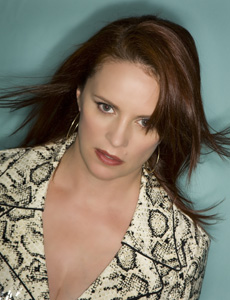
Sheena Easton, vocalist

The highpoint of Heroes and Villains came in the presence and vocal mastery of Sheena Easton. I loved her rendition of “Nobody Does It Better” by Marvin Hammlisch from The Spy Who Loved Me and Bill Conti’s “For Your Eyes Only” from the movie For Your Eyes Only.

A six-time Grammy nominee in the US, Easton is a two-time Grammy Award winner, winning Best New Artist in 1981 and Best Mexican-American Performance in 1985, for her duet with Luis Miguel on the song "Me Gustas Tal Como Eres". And let’s not forget that she’s sold more than 20-million albums and singles worldwide.

“Heroes and Villains” presented my first opportunity to listen to the Pittsburgh Symphony Orchestra Student Chorale, whose members include young men and women vocalists in grades 10 and 12 and college singers.
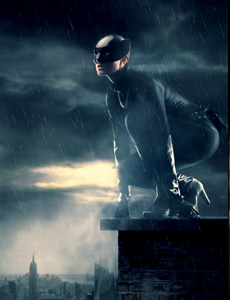
What a treat it was to hear their youthful voices interpret John Williams’s pieces—“Battle of the Heroes” from Star Wars: Episode III: Revenge of the Sith” and “Dry Your Tears, Africa,” from Amistad. Under the Direction of Christine Hestwood, these young men and women touched my heart with their professional, vocal accompaniment.

One segment in particular of Heroes and Villains caught my attention--the “Overture to Tarare" by none other than Antonio Salieri, contemporary of Wolfgang Amadeus Mozart. Before this, I had never experienced Salieri’s music on a symphony program. Herr Mozart, I thought, would have been amazed beyond measure had he witnessed this. Truly!


By:  Hank Walshak
Good News and Cultural Reporter
Hank Walshak, Founder and President of Walshak Communications, Inc., helps experts to be read, be heard, be seen, and be known. He assists experts in creating and delivering expertise-related content to differentiate themselves as experts.
He empowers experts to creatively articulate themselves and to stand out in the scarce space vis-à-vis their competitors in the markets they serve. He is adept at helping executives and business owners communicate their ideas in ways that energize and stay with their audiences.

Thursday, October 30, 2014

Roving Pittsburgher Report "Sleeping Beauty" Ballet a Sleeping Giant


"Sleeping Beauty" Ballet a Sleeping Giant

Review of Pittsburgh Ballet Theatre 45th Season Opening Ballet

by Good News Reporter, Joanne Quinn-Smith


This past week-end the Pittsburgh Ballet Theater opened its 45th Season with a stunning performance of “Sleeping Beauty,” telling the
story of Princess Aurora and her enchanted slumber. My six year old granddaughter and I watched this classic fairy-tale come to life as more than 150 dancers in the world famous score was performed by The Pittsburgh Ballet Theatre Orchestra under the direction of guest conductor Martin West. In our humble view it rivaled the performances of much larger ballet companies.  With all the special effects and beautiful period costumes, my granddaughter said, "It's like a movie."


What an engaging ballet couple, Julia Erikson as Princess Aurora and Noralan Abougaliev as Prince Desire.
We especially enjoyed the fairy solos in the first act accompanied by the men of the corps de ballet. What strong and mesmerizing performances.  We often don't realize that ballet artists are real athletes.  This is particularly emphasized in the famous “Rose Adagio,” performed by Aurora and her four suitors, showcases the strength and control of the ballerina through a series of impressive balances and promenades.  Just the length of time Julia held he poses with grace and seemed to do it with such grace and ease was phenomenal to watch.
The orchestra, playing Tchaikovsky’s historic score under the baton of guest conductor Martin West, this “Sleeping Beauty” truly could feed the soul of any arts enthusiast.  Ballet is so much more exciting with a live orchestra out front and center.   
photo by Rich Sofranko.
Artists: Amanda Cochrane & Yoshiaki Nakano. 
As a grandmother it is important to me that children who attend this ballet are introduced to many Tchaikovsky classics such as “Garland Waltz” used as the tune for Disney’s “Once Upon a Dream.


“The Sleeping Beauty” features scenic and costume designs by David Walker, who evokes a 17th century theme with the regal columns and gold finery of the palace that frames the story. Costume styles include the intricate classical tutus of the fairies, elaborate robes of the courtesans and the jeweled snakes and spiders of Carabosse’s costume. I wondered at not being able to see some of the leg movements in the flowing robes but the overall effect was spellbinding.  Stage effects also enhance the atmosphere, especially with the entrance of Carabosse, whose carriage arrives onstage in a swirl of fog and thunder accompanied by her ghouls. I was particularly impressed with the sheer curtaining, barely discernible that was part of the scenery that set the mood with several acts.  We are so blessed in Pittsburgh with what his ballet theatre can produce in a relatively small city and with I am sure not the resources of bigger city corps.
Amanda Cochrane and Yoshiaki Nakano in Pittsburgh Ballet Theatre's
'The Sleeping Beauty.' photo by 
Rich Sofranko

Anaiyah Thomas loving
the ballet
We missed the Act III cameos by Puss N Boots because a two and a half hour performance is a bit much for a six year old.  She hung in there as long as she could and then told me she was tired and wanted to go home and go to bed, not without regret.  But as we reached the wide expanse of the lobby and while waiting for our cab, she utilized the entire front lobby to imitate the ballerinas flying movements, even using her cocktail sweater as a prop, dancing from end to end of the empty lobby accompanied by the orchestra which we could hear in the lobby.  I think my granddaughter will be dancing around our houses for some time to come although I am sure not as freely as she did in the grand lobby of the Benedum as the Pittsburgh Ballet Theatre played on for Act III of Sleeping Beauty.


 Joanne Quinn-Smith, Award winning internet radio broadcaster, blogger, author and internet radio and TV network editor and publisher. Joanne is the owner and CEO, Creative Energy Officer, of Dreamweaver Marketing Associates, a successful Pittsburgh-based marketing company. She is a grandmother and great grandmother, an unlikely trendsetter for online journalism and broadcasting. Joanne is internationally known as the “Get Your Google On” Gal. But better known as Techno Granny™ to over one million accumulated online listeners worldwide. Joanne has created a revolutionary online NEW MEDIA platform in Internet broadcasting, blogging and other social media participation that represents the new second generation of World Wide Web interactions, known in technology circles as Web 2.0. JQS is the online publisher of PositivelyPittsburghLiveMagazine.com, an online community magazine to disseminate the Positive News for Positive Pittsburghers. PPL Mag is Pittsburgh’s First Internet radio and TV network with syndicated channels and online radio and TV capabilities. 

Wednesday, October 29, 2014

Roving Pittsburgher Report, "Macbeth" The Power of Prophecy, Betrayal, Assassination, Guilt and Revenge


Macbeth
The Power of Prophecy
 Betrayal, Assassination, Guilt and Revenge

Directed by Alan Stanford
PICT Classic Theater
JoAnn R. Forrester, Review

Macbeth, one of Shakespeare’s shortest and darkest plays was first
David Whalen as Macbeth
staged over five hundred years. It’s insights into the human character and the thirst and consequence of greed and power still ring true.
 
The play Macbeth depicts the tale of a brave Scottish General, Macbeth and his wife Lady Macbeth, who become consumed by a prophecy of glory and power based on the prediction of witches heard shortly shortly after a major victory and promotion.  This prophesy grabs him, twists him and turns into a murderous and paranoid man who retains his power by eliminating all those he  perceives as a threat. 

Lady Macbeth passion for power is ignited when she reads the witches prophesy in a letter from her husband.   She sees herself as Queen of Scotland and what is a little murder or two to get what has been prophesized.  She is his eager partner in the royal murder and cover up.  Unexpectedly her conscience raises it head.  Lady Macbeth is gripped in remorse and guilt, and is driven to commit suicide to escape her pain. 

The witches
Macbeth, the “Scottish Play” is a play that is a great challenge to those who embark on it.  It is the one that actors desire and dread.  David Whelan, as Macbeth, is masterful and he passes the actors test.   Lady Macbeth, played by Gayle Pazerski is accomplished as Lady Macbeth who quickly is gripped by the witch’s prophecy and moves to “incite” her husband to strike while it is the opportune time.  Remind me never to be the guest of anyone who has the name Macbeth.

Alan Stoppard is a great director and has that touch that brings the theater alive, whether it is drama, comedy or tragedy.  One of his unique touches was how the witches are portrayed.  They weave an eerie spell of magic with  sinuous movements and their multi layered costumes weave a spell of first they are there and then they are not.

 The Charity Randall Theater captured my imagination with its dark gray vaulted ceiling setting the scene as medieval Scottish castle.  The use of mist to portray the mysterious atmosphere worked well.  The costumes at first seemed drab to me and I wanted to see more color and splendor.  But it worked and forced me and I believe the actors to project their character.  The choreograph scenes of the battles and murders with mist, drums and lighting conveyed the dark murderous times.

I am fascinated by English, Scottish and Irish history.  I revel in reading about the time when the sword and the pike often settle the score and decided who will reign.   It is a bloody ruthless time that we in the US find difficult to understand.  After all, we believe in the “peaceful transfer of power” and fight our battles at the polls.  Of course, if we are honest, we would admit we now use character assassination to accomplish our drive and thirst for political power.  And unfortunately wars are still fought to gain and keep power today.  Regardless of the “reasons” we have wars today; it is still based on Shakespeare’s reading of the human character. 

As one of my British friends would exclaim, “Good show”   I suggest you make the time to see PICT’S Macbeth.  It is first rate theatre.  We are so fortunate to have this first rate Theatre Company with us. Go, enjoy and be immersed in murder and intrigue at its finest. 


Written By: JoAnn R. Forrester
Host of Empress of Biz
Anchor Internet Radio Show on PositivelyPittsburghLiveMagazine.com
JoAnn R. Forrester is co-host of the Empress of Biz Talkcast and co-founder, president and partner in S. I. Business Associates, Small Business Solutions, LLC and Celebrate and Share. She is an entrepreneur, writer, business growth specialist, teacher, columnist and award winning writer. JoAnn specializes in helping small businesses grow and prosper. She is the co-developer of the PRICE IT PERFECT™ cost management system for small business, and has secured over 40 million dollars in loans and investment for her clients.
Fo

Monday, October 27, 2014

Roving Pittsburgher Report, A Triple Play with the Aspen Santa Fe Ballet


A Triple Play with the Aspen Santa Fe Ballet
by Helene Vidovich and Martin Thomas


Pittsburgh Dance Council of the Pittsburgh Cultural Trust started their 2014-15 season on October 11th featuring three commissioned works performed by the Aspen Santa Fe Ballet. Aspen has a population near 7,000 -- it makes sense that they would combine efforts with Santa Fe to field a dance troupe. Both were mining towns in the Rockies and as distances go out West, not really very far from each other.
The first two sets were sparse. Black/white lighting, with the use of spotlights and
Courtesy of Company
shadowing, made things appear and disappear right before our eyes. This stage effect leads us into the depths of the dancers' creativity. The third set, awash with color, used bold lighting changes behind fabric to create the atmosphere. It is amazing what can be accomplished with good lights and a scrim, or two, or three. As the old Vaudeville adage goes, “It packs flat and plays big.” It does. .and did.
The Byham Theater is a beautiful place to watch a show, but from where we were sitting, the sound could use some adjustment. Again, the metallic and electronic sounds were so loud we needed earplugs. When the violins started, they were much softer and difficult to distinguish over the sound effects. In the first piece, “Square None” by
choreographer Norbert De La Cruz III, the music ranged from industrial sound effects that were thundering loud on the bass, to cellist and strings, and Handel Oratorio. The synthesized music on the second piece, “Beautiful Mistake” by choreographer Cayetano Soto, reminded Martin of Josquin des Prez. The third one “Heart(s) pace” by choreographer Ezio Bosso, was a minimalistic piece for strings that had more dissonance then the second -- quite the type of music you would associate with modern dance.
Courtesy Aspen Santa Fe Ballet

Three separate choreographers provided a “what will they do next” anticipation between sets.  The dancers were five women and six disparate men who worked together to become a unit while creating drama and tension. Costuming showed their physiques and accentuated their movements. They exhibited the strength of gymnastics and the grace of ballet intermingled with modern dance movements. The stories they revealed seemed intricate and complex. This provoked a lively discussion all the way to New Kensington on our ride back from "dahntahn" Pittsburgh.


Martin Thomas, Singer, Songwriter, Composer, Videographer
Helene Vidovich, Freelance Cultural Reporter, Graphic Designer, Videographer

Saturday, October 25, 2014

40 Years of Theater; PPT’s 2014 season opens with an American classic: The Glass Menagerie.


40 Years of Theater; PPT’s 2014 season opens with an American classic:  The Glass Menagerie.

Review by Megan Grabowski

Fall has officially arrived in Pittsburgh.  This means, the Pittsburgh Public Theater (PPT) is opening their doors for another season.   On October 9, 2014 I stepped inside the wide windowed atrium of the O’ Reilly Theater on Penn Avenue anticipating an evening of escapism at its’ finest.   This performance of the Tennessee Williams play The Glass Menagerie will surely clutch the strings of the collective hearts of Pittsburghers- expressly those who have supported the success of the PPT since its inception 40 years ago.  Yes, that’s right; this is the 40th anniversary of the PPT.   What better way to commemorate the achievements of the theater than by producing, Menagerie, mirroring the theater’s first season.  

The evening began when  Producing Artistic Director, Ted Pappas, bestowed upon the eager audience an honorable introduction, which included a gracious recognition of PNC and their long withstanding commitment, not only to the achievements of PPT  but to the arts as a whole in our region. Then the lights dim-
The show begins with an overview of the period by Tom Wingfield, played by Fisher Neal. Neal, a
Fisher Neal as Tom and Lynne Wintersteller as Amanda.
seasoned actor is making his Pittsburgh debut in Menagerie.  Williams writing is a vessel for Neal’s eloquence. His voice grants the audience a glimpse into the lives of his family in 1937.  As narrator, Neal reminds us, with the reflective and introverted tone, utilizing the intellect of a poet, that this story is not real; it is a memory and intended to be interpreted as such.  The show proceeds with the remaining characters, Cathyrn Wake, as Laura Wingfield, Lynne Wintersteller staring as Amanda Wingfield and Jordan Whalen cast as Jim O’Connor. Each actor shares with the audience a moment in time, a snap chat of memory and most unfortunate, the immense cruelty and weight of disenchantment that can accompany said remembrances. 


Cathryn Wake as Laura and Jordan Whalen as Jim.
The plot, centers on Laura, a painfully shy and childish young woman.   She suffers from a defect causing her to walk with a pronounced limp. Tom, Laura’s brother, is obliged to play the role of family man since their father left 16 years prior.  Amanda, Tom and Laura’s mother, is a loquacious Southern woman who possesses a parenting style which is nearly suffocating both them both.  Amanda cannot accept her children for who they are. Tom, a poet at heart, works a dead end job in a warehouse, forced to, ‘rise and shine’ day after day, in order to earn a meager wage.  Laura suffers from disillusionment and appears perfectly content to live without ambition.  She spends her time tinkering with a collection of glass figurines, her menagerie, a tactic used to elude her future and any associations with the outside world.  With no plans and no prospects for life on her own, Laura is at the mercy of her mother.  Amanda is becoming increasingly desperate to secure some manner of care for her fragile daughter.  She schemes, and then introduces Tom to a plan to find Laura a gentleman caller.  Tom invites an acquaintance from the warehouse to dinner.  Amanda, irrationally optimistic, believes this gentleman caller, the dinner guest, is Laura’s opportunity to secure a husband. Jim O’Connor, the gentleman caller, accepts Tom’s dinner invitation; totally unaware of any ulterior motives.

Fisher Neal as Tom
Wintersteller’s performance as the high strung and excitable Amanda was unquestionably authentic. Amanda’s incessant criticisms of her children followed by over simplified solutions to their shortcomings in rapid and continuous chitchat was as natural as any neighbor. The rate of her dialogue is sometimes disorienting yet entrancing, as lifelike a character to ever stroll a stage.   Neal presents Tom as astute and withdrawn. His character personifies the struggling artist; a visionary who must break free from the familiar order in to enable the growth of his creativity. Neal naturally captures his place amidst the family dynamics through his portrayal of Tom. The arguments that swell between Tom and Amanda provoke a sense that is unique to familial conflict. His cool mannered narration preserves Laura’s memory and a minute of the past, for all to take in. 

Wake portrays the meek and innocent Laura.  She is quiet and reserved, and very aware of the future unfolding before her.  Nearly a hermit, she has no goals and no self-esteem.  When Amanda announces Laura is to open the door upon Jim’s arrival she is nearly paralyzed. The anguish in her voice as she pleads with her mother not make her open the door is gut wrenching.  Then dinner is served.  Laura is summoned to the table; she collapses in a heap onto the floor.  This moment, Wake’s finest scene in the play, produced gasps and compassionate sighs from the audience.   It was during this scene I felt the burden of humanness.  Wake’s depiction of Laura awakened the memory referred to in the opening narration- Laura’s display of anxiety rings true; it is something primal. Who hasn’t, at one time, frozen with fear?  She is petrified; stifled by her own self judgment and inadequacies.    Wake’s small stature helps give rise to the young Laura.  Her shakiness, limp and near inaudible single word responses to Jim’s inquisition further enhances the model of a weakly young woman. Whatever ails sweet Laura, Wake invokes.

Whalen, cast as Jim O’Connor, the handsome has-bin with natural magnetism, incites Laura.  As a man of many talents, O’Connor excels in reading people’s dispositions.  It is this particular skill that he uses to begin coaxing Laura out of her shell.   His voice and gestures communicate a man on a mission; he’s going places.  Not just in the role of Jim O’Connor the warehouse worker by day, public speaking student at night; destined for something bigger and better than the warehouse, but as a renowned actor sure to make many more appearances on stage across the country.

PPT’s 3rd rendition of The Glass Menagerie reminds us, “Time is the longest distance between two places”. Pittsburgh in the 1970’s, and St. Louis, Missouri in the 1930’s couldn’t be more different, yet, the expertly attuned direction from Pamela Berlin captures the memory of the Wingfield’s troubles through moving dialogue and staging.  The actors make it easy for the audience to suspend their own feelings of disbelief and become swept up into the unfolding drama. But it is Williams’s words which give us an honest glance into the enduring complexities of humanity.
  The Glass Menagerie is a classic 20th century American drama and can be seen from now through November 2, 2014. Purchase tickets here: http://publictheater.culturaldistrict.org/production/40790


Reviewed by Megan Grabowski

Professional writer, Social-Media Junkie, Community Fundraiser and Pittsburgh Enthusiast.

Thursday, September 11, 2014

Hopes and Dreams A Review of REP’s Of Mice and Men Sept. 5th 2014 Opening Performance


Hopes and Dreams
Review of REP’s Of Mice and Men Sept. 5th 2014 Performance

From:  Roving Pittsburgher Report and PositivePittsburghLiveMagazine.com
Written By:  Stephanie Curtice  |  Sept. 08, 2014


It is no secret that we live in a ridiculously fast paced world these days.  And for opening night, September 5th, 2014 of Steinbeck’s “Of Mice and Men” at the Pittsburgh Playhouse, there was a pause.  It was a beautiful pause and a challenging one.  Point Park University’s “The Rep” Professional Theater Company has set the bar for the 2014-2015 season for ALL artistic performances in the Pittsburgh area.  And they set it high.

I smiled with sincere pleasure in my heart, chuckled in humor, stirred in quiet disappointment, felt heartbreak, and was moved by a very deep yearning of hope.  One might think that could be sensory overload, but I think that was the genius of Steinbeck and the amazing artistry of this cast.

Set during the Depression in the rolling golden hills of California, we join roaming farmhands George (Jarrod DiGiorgi) and Lennie (Leandro Cano) leisurely camping under the stars on the eve of starting work at a new ranch.  They are an unlikely pair for the times; Lennie Small, a massively sized and strong man with but a wee child’s intellect, and George Milton, a practical and witty man who tries to look after Lennie as they work hard to pursue the great American Dream.  As they report to the nearby ranch, the simple story of two men just lookin’ for an honest day’s work, quickly becomes complicated.

Carlson, Candy, Whit, George and
Copper the Bloodhound
Photo Courtesy: The REP
George and Lennie’s brotherly bond and hope for the future of owning their own land someday becomes one of great intrigue, inspiration, and suspect to practically everyone on the ranch.  The ranch superintendant Slim (David Whalen) is accustom to, but still struggles with the lonely nature of the job, and notes the men’s loyalty to each other.  Candy (John McManus) grapples with his increasing age and fate to greater degree when a fellow ranch hand shoots his aging hound dog to put it out of its misery.  Crooks (Tommy Lafitte), who lives in the barn where manure is stored because he is black, has such lack of hope for his own future that he thinks of Lennie as being even more “stupid” than he’d first thought, because of Lennie’s wild story that he and George will someday own their own land and live from its plentiful bounty.  The Boss’s son Curley (Luke Halferty, a PPU senior) is always looking for a fight, trying to prove his dominance, and looking for his wandering new bride (Erin Lindsey Krom).  And while Culey’s Wife says she just wants someone to talk to because she’s lonely, all the ranch hands know that she is not only pretty, but a pretty good way to loose their job if seen talking or anything else with her.

The struggles of Lennie’s fellow ranch hands are far beyond his understanding.  He, for the most part, is a gentle giant with a simple understanding of life and his surroundings.  What Lennie knows is that he loves to pet soft things like a dead mouse in his pocket, his new puppy, soft fabric, and someday big soft furry rabbits that he’ll feed alfalfa, that is reaped from their own land, at their own place complete with a windmill.  He and George’s dream will come true if he puts his overwhelming strength to good use and doesn’t get in any trouble.  But even, he had a sense that things aren't going to end well when he said, “Its mean here.”

Now before I get too carried away sounding like a stuffy literary elitist with some profound academic understanding about Steinbeck’s work or specifically about his 1937 novel “Of Mice and Men,” I have a confession.  To the astonishment of a gentleman I spoke with at intermission, I have never read the book.  It felt embarrassing to admit.  In high school the book was required reading for the English honors students, which I was not.  So as we were walking back to our truck, I asked my analytical chemistry professor boyfriend if the point of the work was to challenge the reader/audience member to think about all the very serious social issues the story raises.  During my little literature lesson he responded, “Well,  Steinbeck just traveled and wrote what he observed, but because it does depict so many issues, that is why it’s so frequently used in the classroom.  BUT because it so vividly depicts them that is why some people want it banned from schools completely.”  Now I have some thoughts on that.

“Of Mice and Men” shows how far we’ve thankfully come as a society in many ways, but it takes work to maintain progress and there is work still yet to be done.  The will to do that work is displayed best, but not solely by George, in the form of empathy and then a willingness to dutifully respond with action.   Empathy is what has given our society the inspiration to rise above the wrongness of slavery, segregation, and using the terms like nigger and retard.  So if you don’t think that teaching empathy in a historically accurate context is a good idea, that’s just sad.  We’re not talking about 17th century history either.  This is our country’s recent past, 50-80 years, as in there are still people around who lived it, and to some degree still do.  Gender inequality, racism, economic disparity, euthanasia, treatment of the aging or disabled, and mental healthcare are all contemporary global and local social issues.

Lennie (Leandro Cano) and George (Jarrod DiGiorgi)
Photo Courtesy: The REP
I’m going to veer back on to course here… I got off course because the story is good, as tragic as it is, and the fact that it was performed beautifully.  The set was simple and perfectly so.  Every single cast member WAS their character - living the story.  The superb acting of especially Leandro Cano and Jarrod DiGiorgi gave this stage performance the robustness of a movie amidst the seaming simplicity.  They brought to life their characters and the bond between Lennie and George to show the simple and beautiful notion that hopes and dreams are worth smiling for, even amidst the turmoil of social injustices.  I have not been to a more deserving performance of multiple standing ovations yet in Pittsburgh.

Additional Performances:
Friday, September 5 - Sunday, September 21, 2014  |  Pittsburgh Playhouse - Rauh Theatre

For more information and tickets, please visit www.PittsburghPlayhouse.com


By:  Stephanie Curtice
Good News and Cultural Reporter
PositivelyPittsburghLiveMagazine.com
RovingPittsburgher.blogspot.com
TheNewGirlintheBurgh.blogspot.com
(c) PositivelyPittsburghLiveMagazine.com 2014

Sunday, August 17, 2014

Roving Pittsburgher Report, Yanni Brings Agape, "Love" to Benedum


Yanni Brings Agape, "Love" to Benedum 

YANNI: WORLD TOUR 2014August 16, 2014 | 8 p.m. | Benedum Center

by
Good News Reporter, Joanne Quinn-Smith

Yanni GRACED the Benedum Stage last night with his mesmerizing smile and consummate rapport with the audience who were raucous and appreciative and never faltered in their unity with the performance. The audience was captivated as Yanni took the stage and seemed to say, "Excuse me while I make love to my piano and you can watch and listen as I am accompanied by my 'United Nations' of musicians."

For those few who do not know who Yanni is.  He is a Greek pianist, keyboardist, composer and music producer who has spent most of his adult life in the United States while managing to still travel the world and appear in such historic places as the Acropolis, the Taj Mahal, China's Forbidden City, Russia's Kremlin, Puerto Ricco's El Morro Castle and last night, the world famous Benedum in Pittsburgh, Pa.

Yanni photo by Krystal Ann
Yanni continues to use the musical shorthand that he developed as a child blending jazz, classical, soft rock, and world music to create predominantly instrumental works. As this genre of music was not well suited for commercial pop radio and music television, Yanni achieved international recognition by producing concerts at historic monuments and by producing videos that were broadcast on public television.  That was my first experience with Yanni on PBS, "Yanni, Live at the Acropolis," which by the way yielded the second best-selling music video of all time.

I must tell you it is nothing like sitting in an orchestra seat in a theatre as intimate as the Benedum which, Yanni mentioned how cool it was to be so close to the audience and he took full advantage in engaging and interacting with the audience throughout the evening.  At least fourteen of Yanni's albums have peaked at No. 1 in Billboard's "Top New Age Album" category and two albums (Dare to Dream andIn My Time) received Grammy Award nominations.

Yanni photo by Krystal Ann
Yanni's musicians represent 11 different nationalities including England, Germany, Venezuela, Cuba, Paraguay, China, Canada, USA, Russia, Armenia and Greece.  The talents from each member surpass anything you can imagine prior to attending a performance, and they are all brought to you on one stage under the guidance of a true modern day orchestrator.  The first thing you notice about this orchestra is how much fun they are having and the smiles on their faces. 

The music is at once uplifting, calming, romantic and often intensely sensual and erotic. My nephew had not even heard of Yanni when I asked him to attend at the last minute but became an instant fan coming away from the concert slightly hoarse from cheering.

My nephew Josh (an engineering student form WVU) and I immediately zeroed in on Victor Espinola, the harpist from Asuncion Paraguay.   We were amazed at the octaves that his Paraguayan harp was able to reach with its 36 strings and also excited to discover with research that the harp is Paraguay's national instrument.  His World Electronic Acoustic Music brings a blend of flamenco and gypsy style to the music of the Yanni orchestra.

Yanni, photo by Whit Padgett.
About half way through the concert Yanni features Alexander Zhiroff from Russia on the cello.  We decided that we never knew that the cello could issue such sounds and be such "fun."  The solo was an experience in pure, light-hearted amusement.

From amusement to the international language of music,  Samvel Yervinyan, Violinist from Yerevan, Armenia clearly knew how to make his instrument speak and have it understood in any language. He shows all the signs of beginning his studies at the age of 7 and graduating from Tchaikovsky’s Music Conservatory, perhaps inheriting Tchaikovsky's penchant for gypsy melody.

From the bigness reminiscent of Tchaikovsky to the sounds of the the violin played by the diminutive Mary Simpson, Violin, Virginia, USA who brings a touch of bluegrass to Yanni's orchestra.  From row E we could see her constant smile and hear her making her violin smile also.  Her hi-lighted performances were both energetic and musically endearing.

Other Hi-lights of the concert:


Yanni describes this song as something he wrote about the learning that took place rather than initial reactions like frustration and anger.


Charlie Adams brought down the house with his drum solo.  We weren't timing it but it seemed at least ten minutes long without a hint of boring the audience.  Charlie with his Steeler t-shirt and "Pittsburgh Coffee" used his high energy stage performance and stamina in what was probably the best drum solo the audience had ever heard.

Yanni, photo by Whit Padgett.

Played with the orchestra bathed in red light, you could feel the agape love that Yanni speaks of in his introduction about his mother knowing about "healing" love.  The music wraps around you like a mother's arms and encourages the audience to at once feel loved and excited to be alive.

Santorini
This rendition is so LARGE that it makes you feel as though something epic is about to happen not only from the stage but in your life and at times let you languish in the victory. This piece puts you in the mind of running through open fields, ascending the mountain and then triumphantly observing the beauty of the view.

Yanni didn't tell the story but the world knows he was inspired to help protect giant pandas after he “adopted” a two-month old panda cub at the Chinese Chengdu Research Base of Giant Panda Breeding in October 2011. Yanni was the first western artist to be given the honor of symbolically adopting one of Chengdu’s pandas (a privilege reserved almost exclusively for nations, rather than personalities). He named the panda “Santorini” after one of the most beautiful islands in his native Greece.

Lauren Jelencovich joins Yanni for 'Nightingale' with its oriental theme with her effortless soprano very realistically portraying the song of the Nightingale which Yanni says has the sweetest song of any bird in the world.

The concert was just too full of too much to talk about and after this review is published I will remember more dynamic moments.  I should not neglect to mention outstanding solos by Jason Carder; Trumpet from Arizona and moments of grandeur from Yoel Del Sol; Percussion, Cuba and the duets of Yanni with keyboard player,  Ming Freeman, Taiwan; and also some very unique runs and scales from Gabriel Vivas, Bass from Caracas Venezuela.

There is just not one musician in the group who is not a consummate professional and cannot or has not shown brightly on their own on the international music scene.  I attended the concert under physical duress coming straight from my new daughter-in-law's bridal shower which I had been preparing for three days.  I had told my nephew to nudge me if I fell asleep.  Fat chance!  I arrived exhausted and spent and from the time the orchestra hit the stage began to revitalize.  I left like all of the rest of the audience with a feeling of absolute joy and elation at hearing "art" personified in music with passion, verve, compassion and style.


Joanne Quinn-Smith, Award winning internet radio broadcaster, blogger, author and internet radio and TV network editor and publisher. Joanne is the owner and CEO, Creative Energy Officer, of Dreamweaver Marketing Associates, a successful Pittsburgh-based marketing company. She is a grandmother and great grandmother, an unlikely trendsetter for online journalism and broadcasting. Joanne is internationally known as the “Get Your Google On” Gal. But better known as Techno Granny™ to over one million accumulated online listeners worldwide. Joanne has created a revolutionary online NEW MEDIA platform in Internet broadcasting, blogging and other social media participation that represents the new second generation of World Wide Web interactions, known in technology circles as Web 2.0. JQS is the online publisher of PositivelyPittsburghLiveMagazine.com, an online community magazine to disseminate the Positive News for Positive Pittsburghers. PPL Mag is Pittsburgh’s First Internet radio and TV network with syndicated channels and online radio and TV capabilities.